
2026– · Concept & prototyping
Next-generation CubeSat Concept: OrigamiSat-3 (tentative)
A next-generation 3U CubeSat in the OrigamiSat series, currently undergoing concept study and prototyping based on our previous on-orbit deployment experience.

For prospective students and laboratory visitors: Whether applying from inside or outside the university, please check the graduate admissions information for the Department of Mechanical Engineering as well as SDDL's information sessions. Recordings of previous sessions may also be helpful.
Learn more about our work on the Research page, including project introductions and videos prepared by students. For lab visits, graduate admissions, and collaborations, please contact Prof. Sakamoto (sakamoto [at] sddl.mech.eng.isct.ac.jp).
The 2026 sessions introduced our research and included Q&A in hybrid format. In-person participants could tour the laboratory and talk with students.
All sessions took place in Room 502A, 5th floor, Ishikawadai Building 3. Dates for future sessions will be announced when confirmed.
The new era often called “New Space” is making space development increasingly relevant to everyday life. High-capacity communications and frequent Earth observation support connectivity, environmental monitoring, and security. Space-based platforms also expand opportunities for deep-space exploration and astronomical research.
A wide range of structures has already been built in space. Future exploration and utilization will require many new kinds of space structures. We approach them as dynamic systems and consider their behavior from three complementary perspectives.
Our laboratory calls this approach Space-Structure Dynamics Design. We aim to establish and systematize methodologies for building dynamic space structures while advancing fundamental disciplines such as structural dynamics and systems engineering.
Our mission at SDDL is to establish methodologies for constructing large structures in space. We pursue this goal through the following activities.
By combining the study of fundamental principles with on-orbit demonstrations, we seek to open new directions in space development with a strong sense of scientific responsibility.
A next-generation 3U CubeSat in the OrigamiSat series, currently undergoing concept study and prototyping based on our previous on-orbit deployment experience.

A 3U CubeSat carrying a deployable reflectarray antenna made of a two-layer woven textile membrane. Launched from New Zealand in April 2026, it successfully demonstrated membrane deployment and 5.8 GHz-band communication in orbit.
Read more →
Launched in December 2025. A Ka-band phased-array transceiver mounted on a flexible space membrane structure successfully demonstrated radio transmission and beam scanning in orbit.
Read more →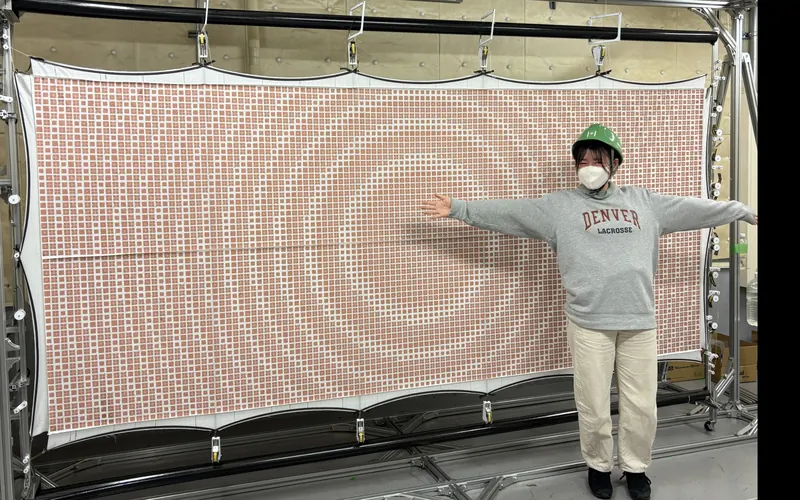
We are developing integrated structural, mechanism, and electromagnetic designs to realize large deployable reflectarray antennas using lightweight, highly stowable textile substrates.
Read more →
The first satellite in the OrigamiSat series. Launched in December 2019, it carried out an in-orbit demonstration of deployment technology for a 1 m-class membrane structure. Operations ended in 2022.
Read more →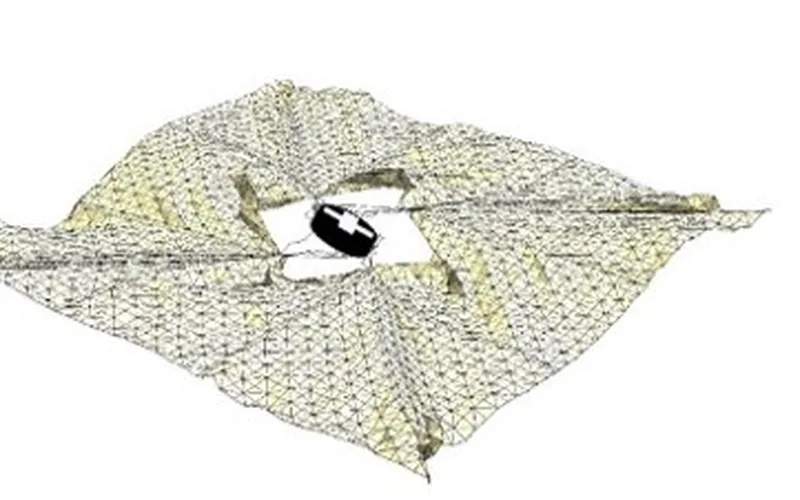
Beginning with IKAROS, launched in 2010, we study the dynamic behavior, deployed shapes, orbital and attitude motion, and analysis and design methods of large, flexible membrane structures.
Read more →